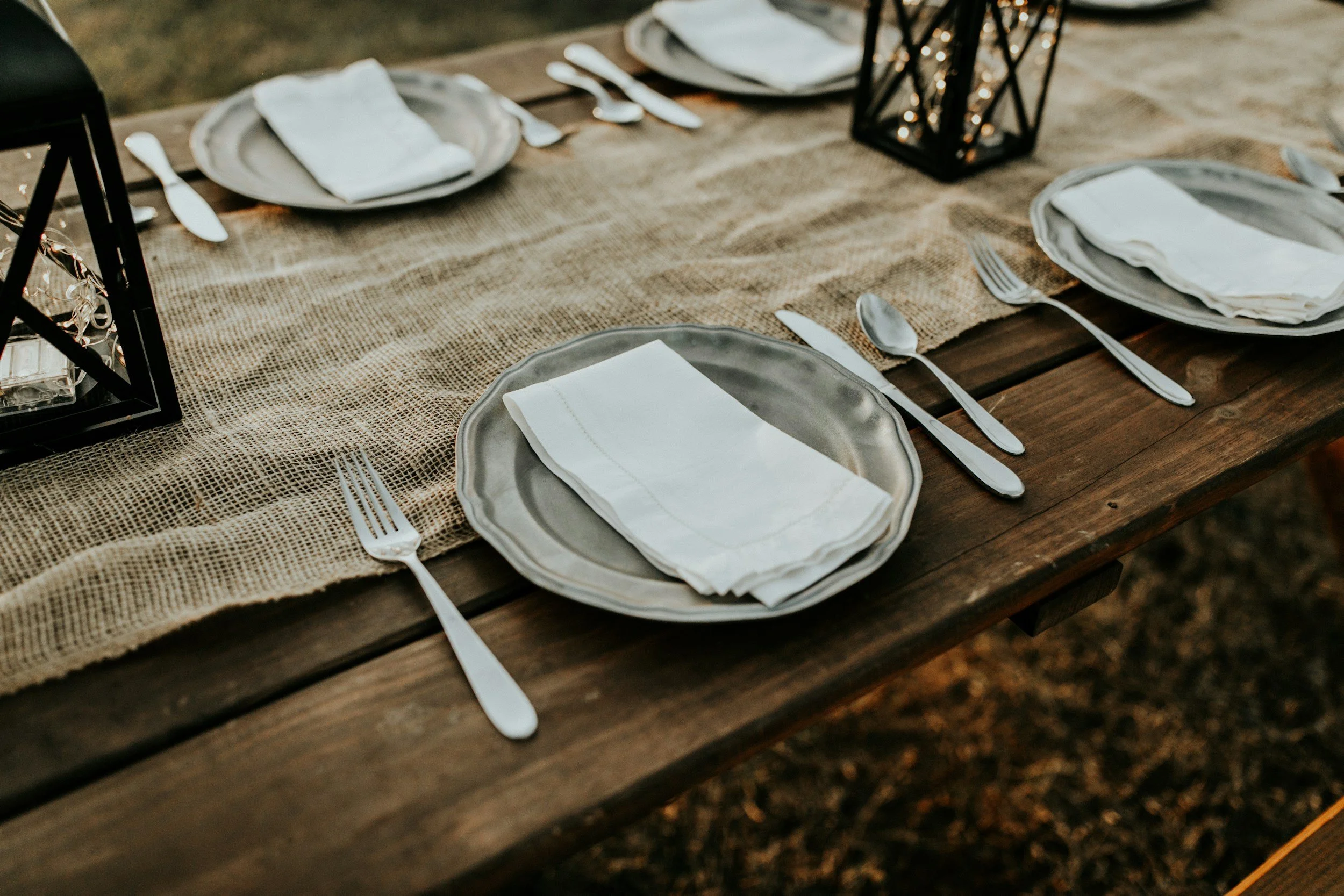
Where Are We Supposed to Eat Thanksgiving Dinner When Family Isn't Really an Option?
By Alexandria Gohla, MSW, LCSW, Ed.S
On chosen family, complicated relationships, and creating a holiday that actually feels like yours.
Every November, the questions start rolling in.
“Where are you going for Thanksgiving?”
“Are you hosting this year?”
“Are you going to your parents' house?”
“Whose side of the family are you spending it with?”
For some people, these are simple questions. They have traditions, familiar faces, and a place at a table that's been waiting for them for years.
For others, those questions are a little more complicated.
Because what if you don't have somewhere to go?
What if your family lives far away? What if the people you once celebrated with have died? What if your relationships with your parents or siblings are strained, distant, or nonexistent?
What if you technically have family, but being around them doesn't feel emotionally safe?
And what if you're sitting there thinking, Well, I guess we're making a turkey for two this year.
The holidays have a way of reminding us not only of the people in our lives, but also of the people who aren't.
And sometimes the hardest part isn't the holiday itself.
It's the expectation that everyone has somewhere they belong.
When the Holiday Table Looks Different Than You Imagined
There's a particular kind of grief that comes with realizing your family doesn't look the way you thought it would.
Maybe you grew up imagining holidays filled with cousins, grandparents, siblings, and traditions that would carry into adulthood.
Maybe you pictured your children running around with their cousins while everyone gathered in the kitchen.
Maybe you assumed you'd always have your parents' house to return to.
Or maybe you spent years hoping that, eventually, your family relationships would become easier.
Then life happened.
People died. Relationships changed. Distance grew. Boundaries were established. Some connections faded quietly, while others ended painfully.
And suddenly Thanksgiving looks very different from the picture you had in your head.
You might grieve the family you once had.
You might grieve the family you never really had.
Or you might grieve the family you kept hoping yours would become.
You can miss the idea of a family gathering without missing the reality of what those gatherings were actually like.
That's an important distinction.
Sometimes we aren't longing for the people themselves as much as we're longing for what those relationships were supposed to provide: comfort, familiarity, acceptance, and a sense of belonging.
Having Family Doesn't Always Mean Feeling Like You Have Family
One of the things we don't talk about enough is how lonely it can feel to have living relatives and still feel like you don't have a family.
Family estrangement, complicated parent-child relationships, sibling conflict, and longstanding emotional disconnection don't disappear just because it's Thanksgiving.
In fact, the holidays can make those experiences feel even more noticeable.
There's pressure to reconcile.
Pressure to forgive.
Pressure to show up because “they're still your family.”
But sharing DNA doesn't automatically create emotional safety.
Being related to someone doesn't guarantee mutual respect, support, or connection.
And maintaining a relationship simply because it's expected isn't always the healthiest choice.
For some people, spending Thanksgiving apart from certain relatives is a painful consequence of circumstances they never wanted.
For others, it's a necessary boundary.
Sometimes it's both.
You can feel sadness about a relationship and still know that distance is what you need.
You don't have to turn every holiday into an opportunity to revisit a relationship that has repeatedly hurt you.
And you don't have to justify your family circumstances to everyone who asks where you're eating dinner.
The Question Nobody Seems to Ask: What If We Don't Have a Table to Go To?
Holiday conversations often assume that everyone is choosing between invitations.
Your parents' house or your in-laws' house?
Hosting or traveling?
Thanksgiving lunch or Thanksgiving dinner?
But what if there aren't invitations to choose between?
What if you're single, newly divorced, widowed, estranged, geographically separated from family, or simply not connected to a large extended family?
What if you're a couple or a small family unit trying to figure out what Thanksgiving is supposed to look like when nobody is hosting?
It's easy to feel like you're doing the holiday wrong.
Social media certainly doesn't help.
Everyone seems to be posting crowded dining rooms, matching sweaters, tables overflowing with food, and captions about being surrounded by their favorite people.
Meanwhile, you're trying to decide whether making an entire turkey for three people is worth the effort.
Here's something worth remembering:
A full table isn't necessarily a connected table. And a small table isn't necessarily a lonely one.
The number of people at your Thanksgiving dinner doesn't determine the quality of your relationships or the value of your holiday.
There is no minimum attendance requirement for a meaningful Thanksgiving.
Chosen Family Is Still Family
One of the most beautiful things about adulthood is realizing that family can be something we build, not just something we're born into.
Chosen family might include lifelong friends, neighbors, coworkers who became close friends, mentors, or people who consistently show up for us.
They're the people who check in when life gets hard.
The people who remember what's important to us.
The people who make space for us to be ourselves without requiring us to play a particular role.
Sometimes those people are relatives.
Sometimes they're not.
And sometimes our chosen family provides the emotional safety, consistency, and belonging we always wished we'd experienced in our family of origin.
That doesn't mean chosen family automatically replaces the grief of difficult birth-family relationships.
You can deeply appreciate the people you've found and still feel sad about the relationships you've lost or never had.
Both experiences deserve space.
Chosen family isn't a consolation prize.
It's a reminder that belonging can be created in more than one way.
And Thanksgiving can be a wonderful opportunity to begin making room for those connections.
Maybe it's Friendsgiving.
Maybe it's inviting another family over who also doesn't have somewhere to go.
Maybe it's dinner with your closest friend.
Maybe it's a holiday with the people who have become your support system over the years.
You don't need a traditional family structure to create meaningful traditions.
What If We Stopped Trying to Recreate the Holidays We Thought We'd Have?
Sometimes the most difficult part of changing holiday traditions is accepting that they need to change.
We hold tightly to what Thanksgiving is supposed to look like.
The big meal.
The extended family.
The same traditions we've had since childhood.
The house full of people.
But what if those expectations are making the holiday harder than it needs to be?
What if, instead of asking, “How do we make Thanksgiving look like everyone else's?” we asked:
“What would actually make this day feel good for us?”
Maybe that means cooking your favorite foods instead of a traditional Thanksgiving dinner.
Maybe it means going out to eat.
Maybe it means volunteering, taking a trip, inviting friends over, or ordering takeout and spending the day in pajamas.
Maybe you start a tradition with your children that has nothing to do with the traditions you grew up with.
Maybe you do absolutely nothing.
You're allowed to create something different.
And if you have children, remember that they don't necessarily need the exact holiday experience you imagined for them.
They need opportunities for connection, consistency, joy, and belonging.
Those things can happen around a table of twenty people.
They can also happen around a table of three.
Making Space for the Grief Without Letting It Define the Day
Creating new traditions doesn't mean you have to pretend the losses don't hurt.
You might genuinely enjoy your small Thanksgiving dinner and still feel sad when you see photos of extended families celebrating together.
You might feel relieved that you aren't navigating a stressful family gathering and still wish things had turned out differently.
You might love your chosen family and still miss your parents, siblings, or the relationships you hoped to have.
Those feelings aren't contradictory.
They're part of being human.
Instead of trying to force yourself into gratitude, consider making room for whatever shows up.
You might acknowledge the people or relationships you're missing.
You might talk openly with your partner or children about why the holidays look different.
You might allow yourself a quiet moment to grieve before returning to the parts of the day you enjoy.
And you might discover that gratitude feels more genuine when you aren't using it to silence your sadness.
You don't have to choose between appreciating what you have and grieving what you don't.
So, Where Are We Eating Thanksgiving Dinner?
Maybe that's the question we get to answer differently this year.
Not based on obligation.
Not based on what other families are doing.
Not based on what the holidays looked like ten years ago.
But based on the relationships, experiences, and traditions that make sense for our lives now.
Maybe we're eating with our birth family.
Maybe we're eating with our chosen family.
Maybe we're inviting people who need somewhere to go.
Maybe we're starting a new tradition with our partner, children, friends, or ourselves.
And maybe we're still figuring it out.
That's okay, too.
Because the goal isn't to recreate a picture-perfect holiday.
The goal is to build a life where we experience genuine connection, emotional safety, and belonging—even when that looks different from what we originally imagined.
And if you're still figuring out where you're eating Thanksgiving dinner this year, remember:
You don't need a crowded table to have a meaningful holiday.
You deserve a place where you can show up as yourself.
Even if you're the one who has to start setting that table.
A Note From Bluebird Counseling Services
The holidays can bring complicated feelings about family relationships, grief, estrangement, loneliness, and belonging.
At Bluebird Counseling Services, we help individuals navigate anxiety, relationship challenges, life transitions, and the emotional weight of changing family dynamics.
If this season is bringing up more than you expected, you don't have to navigate it alone.
We offer virtual therapy and free 15-minute phone consultations.
Learn more: bluebirdcounselingservices.com